Solutions · Revenue & GTM
An AI revenue employee that owns pipeline creation.
Not an outreach tool. An AI employee with a job: pipeline creation, end to end.
- Finds and enriches accounts against the ICP you define
- Sends from your reps' own inboxes, follows up every time
- Qualifies, books the meeting, updates the CRM
- Reports the pipeline it created and what it cost
Pipeline, meetings, cost per meeting — as the workforce produces them.
The AI employee’s live dashboard
Pipeline, meetings, cost per meeting — as the workforce produces them.
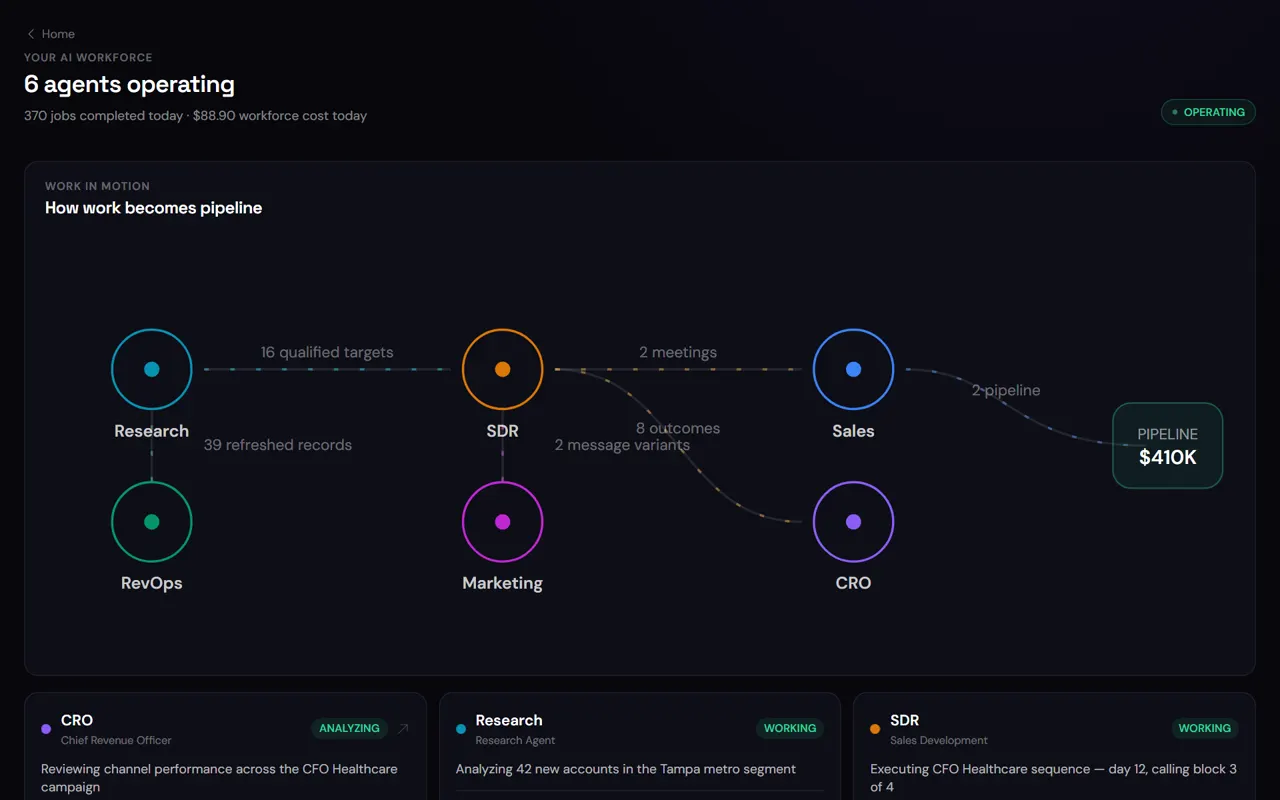
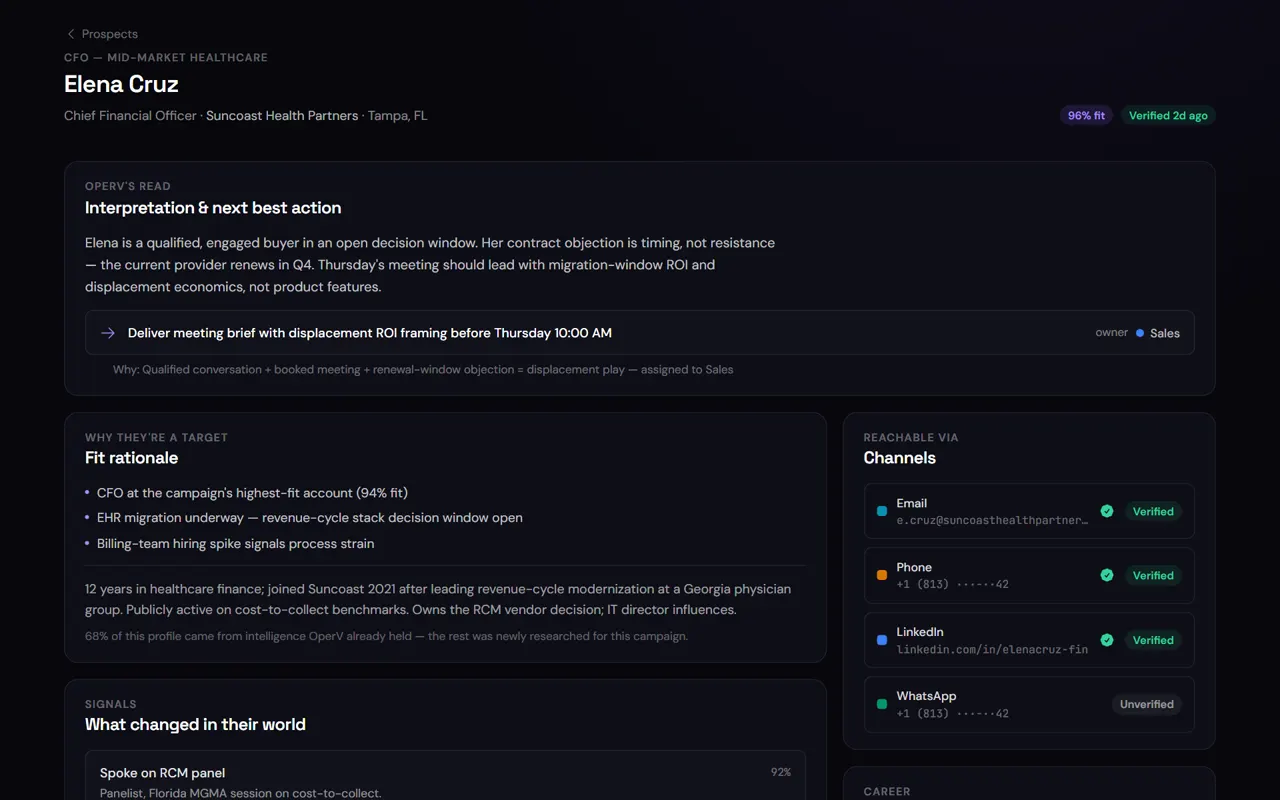
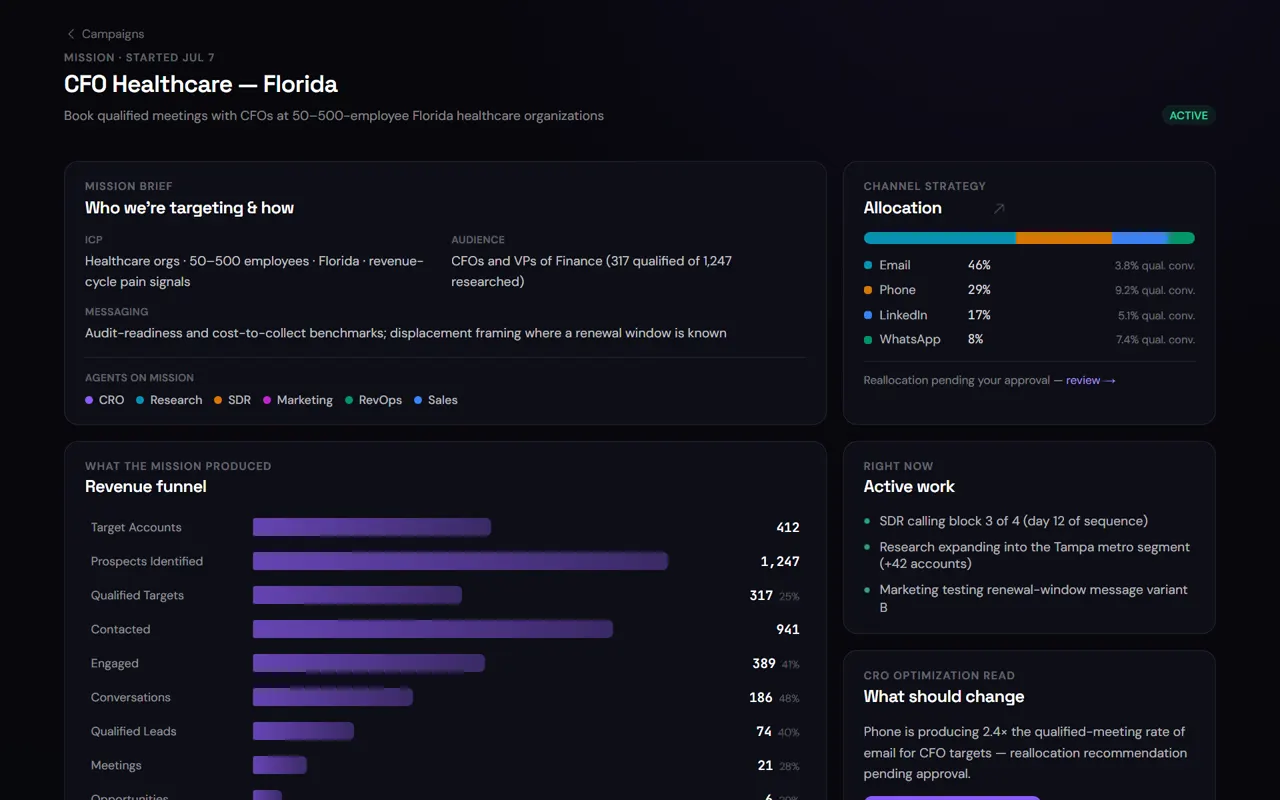
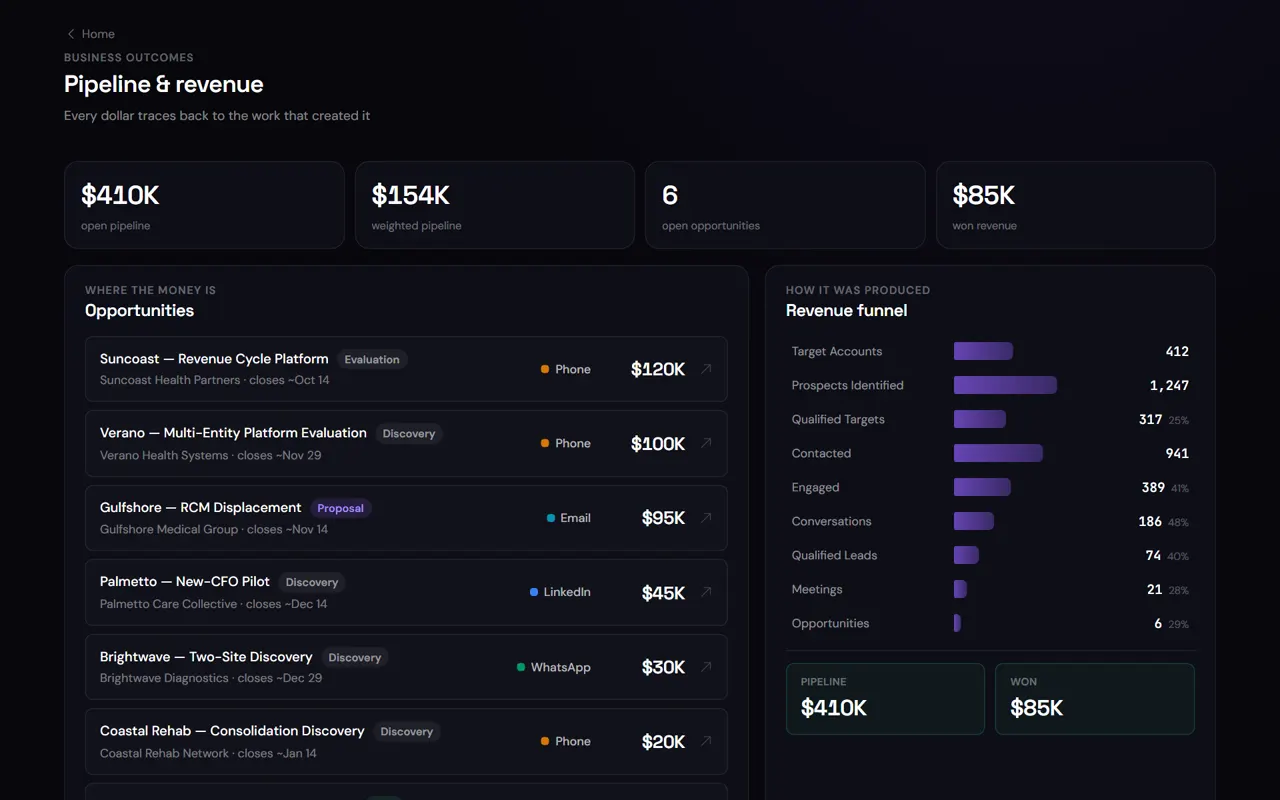
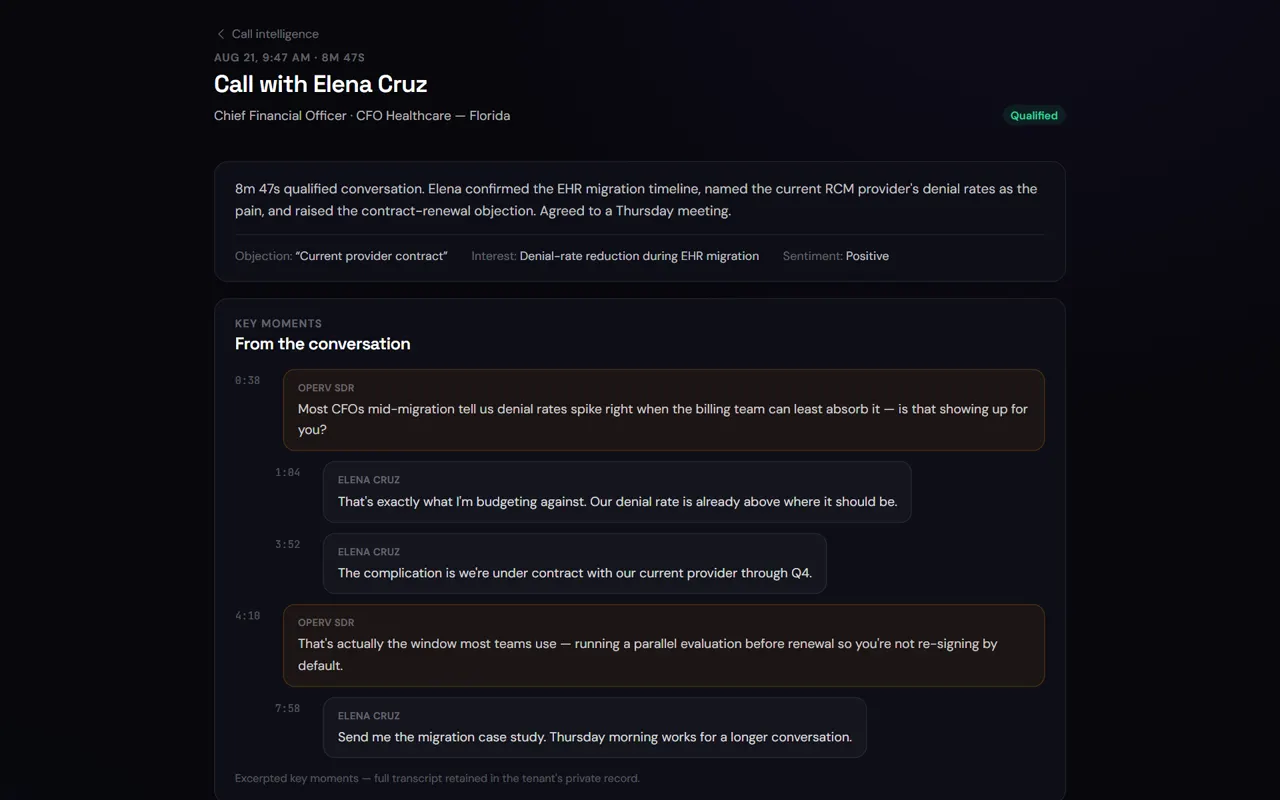
Every number on the dashboard drills into screens like these — in the product.
Live product screen · illustrative workspace data · deeper screens are captures from the product
Work in motion · the loop this AI employee owns
Operating
AI voice calling — outbound outreach and inbound call handling, with the same approvals, evidence and scorecard
A working day
What changes, hour by hour.
The same day, with and without an AI employee picking up the work that doesn't need a person's judgment — only a person's time.
- 07:30—The AI employee has enriched overnight inbound and built today's target list from CRM lookalikes + hiring signals.Reps start the day with a target list, not a blank one.
- 08:15Rep opens 40 tabs to research 8 accounts.Rep opens the queue: 12 first-touch drafts with account briefs. Approves 10, edits 2, declines 0. Eleven minutes.Hours of tab-hopping becomes an 11-minute review.
- 09:00Sequences go out — the ones that got written.Approved sequences sent from the rep's inbox. CRM activities logged. Follow-ups scheduled per policy.Every planned sequence actually goes out the day it's supposed to.
- 11:40A warm reply lands. Rep is on a call; sees it at 16:00.Reply classified positive, two slots proposed within 4 minutes. Booking confirms at 11:52.A warm reply gets a meeting slot before it goes cold.
- 14:00Day-4 follow-ups: 6 of 14 get sent.14 of 14 sent, each referencing the original thread. Two replies by end of day.No planned follow-up quietly drops off the list.
- 17:30CRM update deferred to Friday.CRM already current. Scorecard: 3 meetings booked, 27 replies handled, cost per meeting $38.CRM hygiene and reporting stop being a Friday-afternoon chore.
Division of labour
What the AI employee does. What your team keeps.
- Account and contact research, enrichment, list building against the ICP you configured
- First-touch drafting in the rep's voice; sending from the rep's own inbox with send windows and limits
- Follow-up cadence — every planned touch actually sent
- Reply classification, safe answers, escalation with a suggested response
- Slot proposal, confirmation, rescheduling; CRM stage and activity updates
- Daily and weekly reports: pipeline created, meetings, cost, what needed a person
- Approving first touches, pricing and anything else authority reserves
- The discovery call, the demo, the negotiation — the conversation itself
- Editing tone and criteria (each edit becomes a pattern the AI employee applies)
- Deciding which segments to pursue and when to change the play
- Owning the relationship in the CRM — the AI employee writes activity, not strategy
Speed to value
Connect. Configure. Deploy.
Days, not quarters. Common systems connect in a day; the AI employee runs monitored before it runs alone.
- Day 1
Connect CRM, inbox, calendar and enrichment with the scopes you approve.
- Day 2
Configure ICP, tone, send policy, KPIs and the authority level per action — using the brand voice, pricing and messaging examples you share, so outreach runs inside guardrails built around your company.
- Day 3
Monitored run: first briefs and drafts land in the queue; you approve, edit, decline.
- Days 4–5
Tune approvals and windows; open the dial where you're comfortable.
- Week 1
Production sequences live from reps' inboxes; first weekly report.
Outcomes
The numbers we'd expect you to hold us to.
Illustrative targets from the ROI model defaults — every one is editable on the calculator and visible on the AI employee's scorecard from day one.
Down from hours. Speed to lead is the single strongest predictor of reply rate in the model.
Versus the ~45% a busy rep manages. The touches that were planned actually happen.
Default model lift from response time and follow-up completion combined. Editable on the calculator.
Fit
A good fit if…
- You're growing the business and want to scale pipeline and revenue while optimizing cost — not just adding reps to keep up
- You run outbound or inbound with 2+ reps/SDRs and a CRM you actually use
- Reply speed and follow-up discipline are where pipeline leaks today
- You want reps approving touches, not writing them — and you want to see the trail
- Your security team will ask about tenancy, data use and audit before signing
Straight answers
The questions we get first.
- Will it sound like a bot?
- It sends in the rep's voice from the rep's inbox, drafted against tone and examples you configure. That's the trust-building pilot: the AI drafts, the rep sends. As confidence builds, you open the dial toward the AI sending on its own, on your timeline — never ours.
- What stops it from emailing the wrong people?
- List changes and first touches are gated by default. Nothing new gets contacted without a person approving the list and the message — until you decide otherwise.
- Does it replace our sequencing tool?
- It can run alongside it through adapters, or replace the drafting and follow-up part of it. Your CRM stays the system of record either way.
- How do we know what it did?
- Every action is a work object with evidence. The scorecard and the dashboards are computed from that record, not from a separate reporting layer.
Run the loop on one of your own.
Bring a live role or segment to the demo. You'll see the queue fill, approve a few items, and read the evidence behind every number.